Short answer
When evaluating projectors, understanding the core imaging technology is critical because it dictates how the projector constructs the image and determines its strengths and weaknesses in areas like contrast, motion, color, and maintenance.
The three primary imaging technologies used in modern projectors are DLP, LCD, and LCoS.
Here is a breakdown of how they work and their respective pros and cons:
1. DLP (Digital Light Processing)
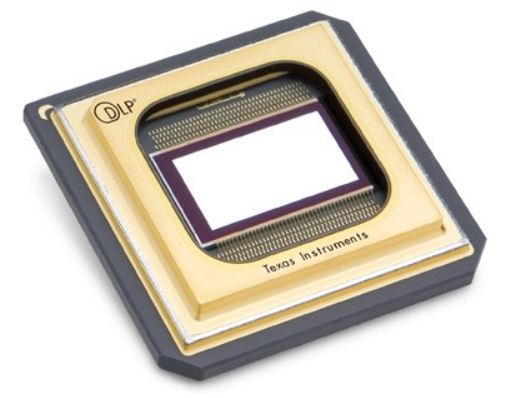
DLP is a proprietary technology developed by Texas Instruments. Instead of passing light through glass panels, DLP is a reflective system.
How It Works: DLP uses a Digital Micromirror Device (DMD) chip. This chip is covered with millions of microscopic, micro-mechanical mirrors, with each mirror representing a single pixel. To create an image, these tiny mirrors tilt back and forth at incredibly high speeds, either reflecting light through the lens (turning the pixel on) or deflecting it away (turning it off). In less expensive single-chip DLP projectors, a rapidly spinning color wheel sits in the light path, sequentially flashing red, green, and blue light across the chip fast enough to trick the human eye into seeing a full-color image.
Pros of DLP:
High Brightness and Efficiency
Sharpness and Smoothness: DLP boasts a very high fill factor (the percentage of the imaging area used to display the pixel). This results in a smoother image and heavily reduces the "screen-door effect" (visible pixel gaps) common in older LCDs.
Motion Handling: Because the mirrors move mechanically at microsecond speeds, DLP has a superior temporal response, meaning it handles fast motion with less blur and often has very low input lag, making it excellent for gaming.
Durability and Maintenance: The DMD chip is a sealed optical system, protecting it from dust. As a result, many DLP projectors do not require air filters to be cleaned or replaced, reducing maintenance costs. Furthermore, the micro-mirrors do not degrade or discolor over time, meaning DLP maintains its color consistency longer than LCD panels.
Contrast: High-end DLP models can produce impressive contrast levels and deep blacks.
Cons of DLP:
The "Rainbow Effect": Because single-chip DLP relies on a spinning color wheel to present colors sequentially, some viewers are susceptible to seeing brief, distracting flashes of red, green, and blue (rainbow artifacts), particularly in high-contrast scenes.
Color Brightness (CLO): In single-chip DLP models that use a white segment on their color wheel to boost overall brightness (common in business models), the color light output can be significantly dimmer than the white light output, making colors appear less vibrant.
2. LCD (Liquid Crystal Display)
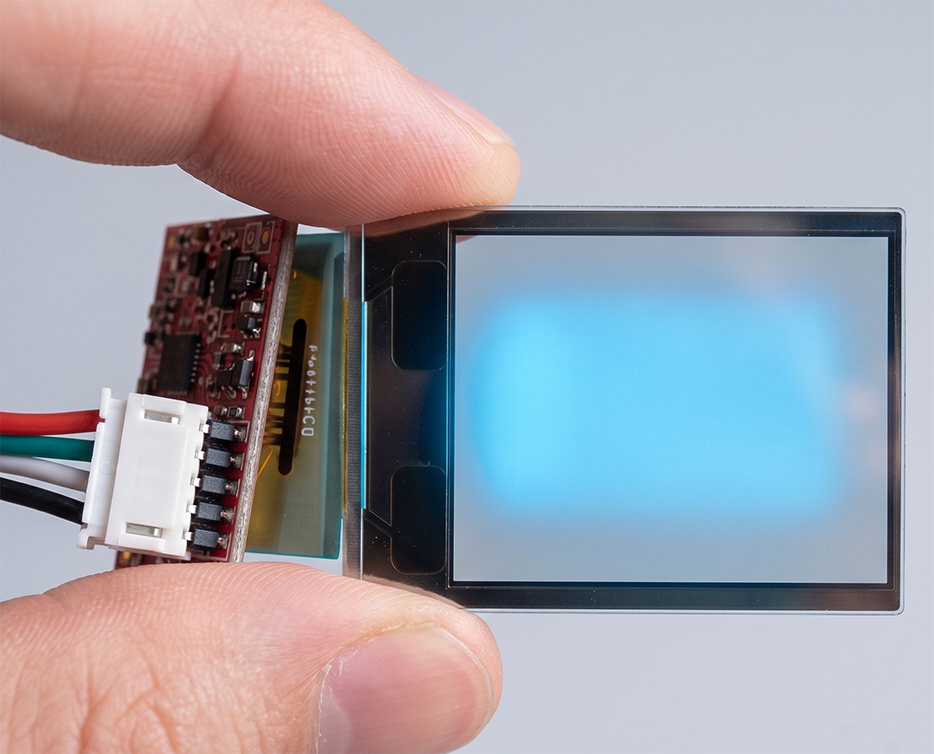
LCLCD (Liquid Crystal Display)
LCD projectors utilize a transmissive technology, similar to what you find in electronic watches, basic monitors, or smartphone screens. Today, the LCD projector market are split into two distinct categories: the high-volume and newer 1LCD design found in modern budget projectors, and the older legacy HTS 3LCD design by brands like Epson.
How It Works:
1LCD (The New Budget Standard): A bright white light source (usually an LED) shines directly through a single, full-color LCD panel. This single panel handles all the red, green, and blue color filtering simultaneously, and the resulting image is projected through the lens.
3LCD (Older but Robust Standard): The projector's light source is split into three separate beams (red, green, and blue). Each beam is directed through its own dedicated monochrome liquid-crystal glass panel. The three colored images are then flawlessly recombined in a glass prism before being projected out of the lens.
Pros of LCD:
Cost-Effective (1LCD): Because it uses a single screen similar to mobile phone manufacturing, 1LCD is incredibly cheap to produce. This is what allows manufacturers to sell smart, 1080p native projectors for under $100.
Color Saturation (3LCD): 3LCD projectors modulate all three colors continuously in dedicated panels, allowing them to excel at producing rich, highly saturated colors with equal white and color brightness.
Cons of LCD:
Severe Thermal Degradation (1LCD): Because a single LCD panel handles all the color filtering, it absorbs a massive amount of light energy that is converted directly into heat. This high thermal load causes the liquid crystals and polarizers to degrade, often resulting in brown or yellow burn spots on the screen over time.
Low Light Efficiency (1LCD): Pushing light through a single color-filtered panel blocks a tremendous amount of the original light output, which is why budget 1LCD projectors generally have very low true ANSI lumen ratings.
Maintenance (3LCD & 1LCD): LCD optical paths are typically unsealed. This makes them susceptible to dust contamination, requiring regular cleaning of air filters to prevent "dust blobs" from settling on the panels and appearing on your screen.
Lower Native Contrast: Historically, transmissive LCD technology struggles to produce the deep, inky blacks found in high-end DLP and LCoS models, as some light always bleeds through the liquid crystals.
3. LCoS (Liquid Crystal on Silicon)
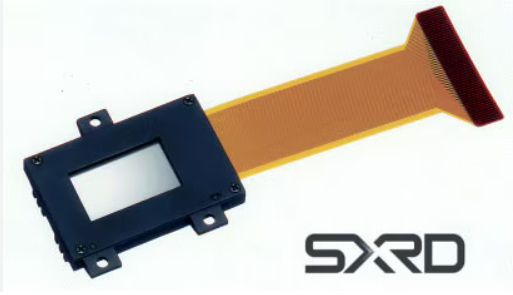
LCoS is a hybrid technology that attempts to combine the reflective advantages of DLP with the transmissive liquid-crystal modulation of LCD. It is marketed under proprietary names like Sony's SXRD and JVC's D-ILA.
How It Works: Like LCD, LCoS uses three separate imagers for red, green, and blue. However, instead of the light passing through a glass panel, the liquid crystal layer sits on top of a highly reflective silicon backplane. The light enters the liquid crystals, is modulated, reflects off the shiny silicon surface behind it, and passes back out through the crystals to the lens.
Pros of LCoS:
Unmatched Contrast and Black Levels: LCoS is widely considered the gold standard for native contrast, producing incredibly deep blacks and exceptional shadow detail that DLP and LCD struggle to match.
Smooth, Film-like Image: The pixel fill rate on LCoS is incredibly high, making pixel gaps virtually invisible. This results in a very natural, smooth, and highly detailed image.
Excellent Color and No Rainbows: Like LCD, it provides simultaneous, continuous color representation, offering accurate colors without any rainbow artifacts.
Cons of LCoS:
High Cost and Size: The manufacturing process for LCoS panels is complex, resulting in low production yields. Consequently, LCoS projectors are significantly more expensive, larger, and heavier than most DLP and LCD models.
Thermal Sensitivity: Because it still relies on organic liquid-crystal layers, it inherits some of the thermal instability and potential for degradation over long periods, though the reflective design mitigates this slightly compared to transmissive LCD.
Motion Blur: Like LCD, it relies on the response time of liquid crystals, meaning it can exhibit slightly more motion blur during fast-moving scenes compared to the mechanical speed of DLP.
Honorable Mention: MEMS
How MEMS Laser Beam Scanning Works
Unlike DLP, LCD, or LCoS—which illuminate an entire panel or chip of pixels all at once to create a frame—MEMS LBS is a "scanning" technology. It draws the image pixel by pixel, line by line, incredibly fast.
The Light Source: The system uses individual red, green, and blue laser diodes.
The MEMS Mirror: The core of the system is a tiny, highly reflective micro-mirror mounted on a movable silicon hinge (the MEMS component). This mirror is exceptionally small (sometimes only a millimeter or two across).
The Scanning Process: The RGB lasers shoot a combined beam onto the MEMS mirror. Using electrostatic or piezoelectric forces, the mirror tilts back and forth on two axes at incredibly high speeds (often tens of thousands of times per second). As it moves, it sweeps the laser beam across the projection surface.
Modulation: As the mirror sweeps, the lasers rapidly turn on, change color, and turn off to draw each individual pixel. Because this happens so fast (leveraging the human eye's "persistence of vision"), your brain perceives it as a single, complete, continuous image.
Pros of MEMS LBS
Infinite Focus / Focus-Free: Because the image is created by a scanning laser beam rather than light passing through a lens from a fixed panel, LBS images are inherently in focus at all times, regardless of the projection distance or the shape of the surface.
Extreme Compactness: LBS systems do not require complex optical lens arrays, color wheels, or large cooling systems. The entire light engine can be smaller than a sugar cube, making it ideal for integration into smart glasses or smartphones.
High Efficiency and Low Power: The lasers only fire when an actual pixel needs to be drawn. If a pixel is black, the laser simply turns off, wasting no light or heat. This provides incredible native contrast (infinite blacks) and very low power consumption.
Cons of MEMS LBS
Brightness Limitations: While the lasers are highly efficient, the overall light output is currently constrained by eye-safety regulations and the thermal limits of the micro-components. They cannot currently match the thousands of lumens produced by standard home theater projectors.
Speckle: Because they use highly coherent laser light directly on a surface, LBS projectors often suffer from "laser speckle"—a shimmering, granular artifact that can make the image look noisy or sparkly. Manufacturers have to implement complex despeckling techniques to mitigate this.